
Retatrutide (Triple GLP-1/GIP/Glucagon Agonist) Research Peptide
$ 90.40
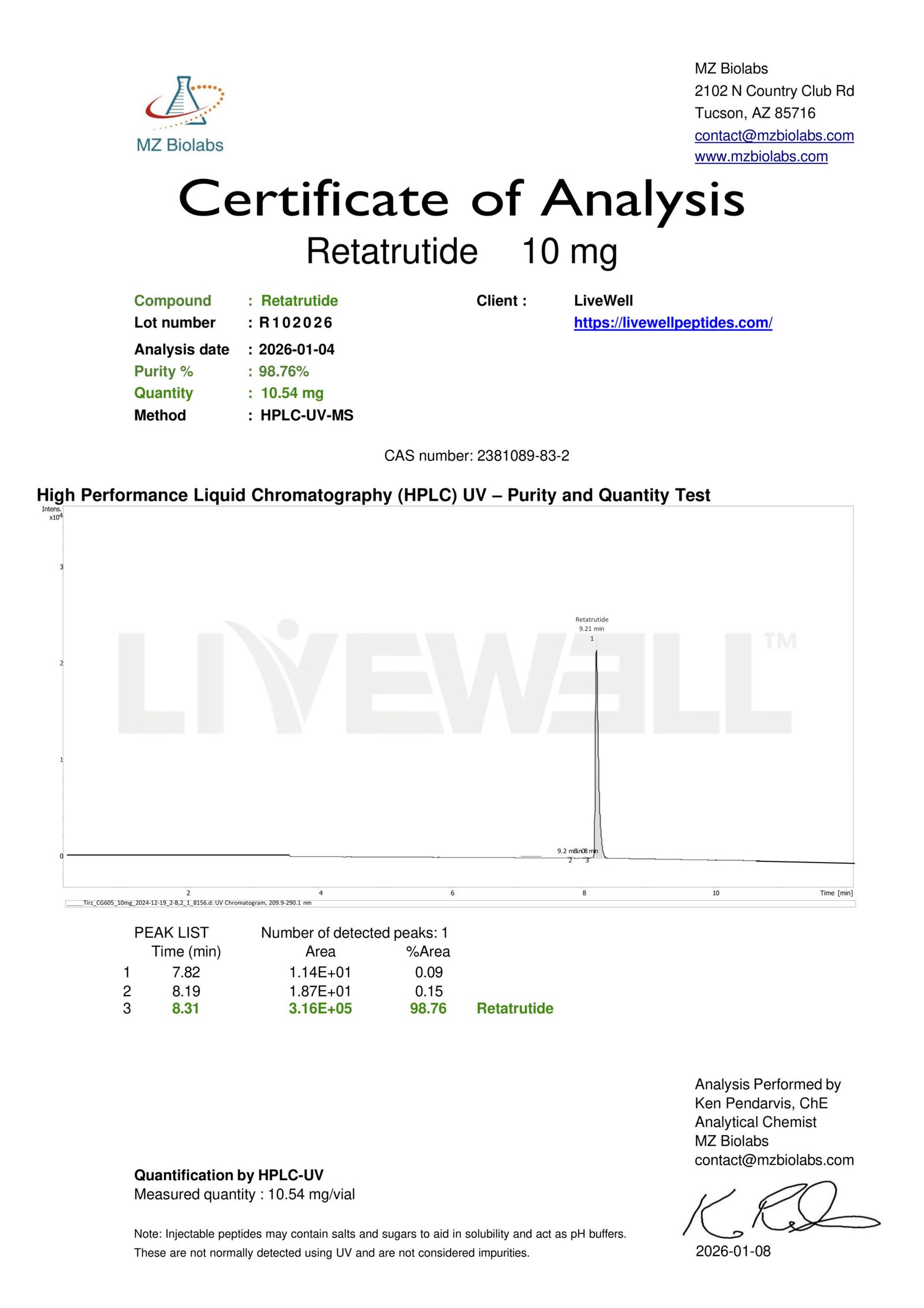
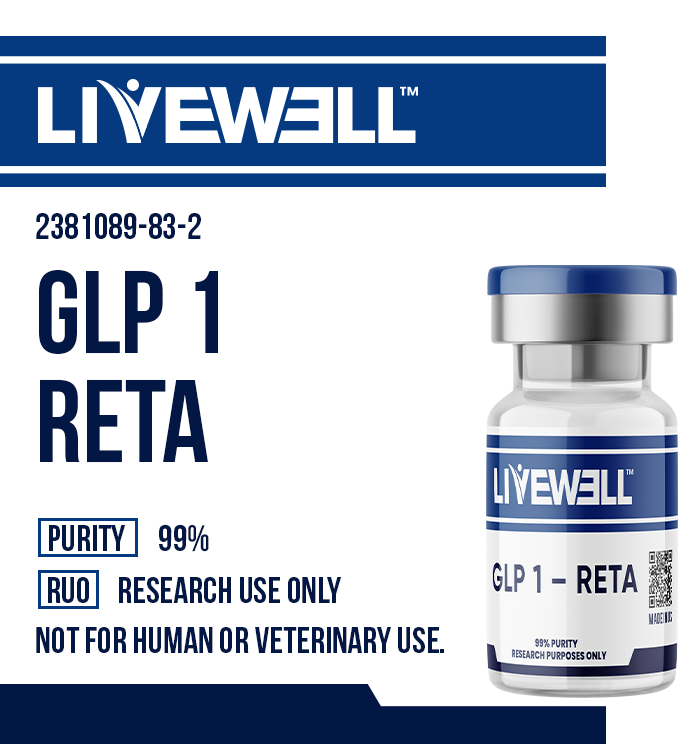
GLP1 – R is a 39-amino-acid triple receptor agonist peptide that activates GLP-1, GIP, and glucagon receptors simultaneously, studied for its role in multi-pathway incretin signaling and metabolic receptor interaction research. Supplied as a lyophilized vial for in-vitro laboratory research use only. Research-grade specs Sequence length: 39 amino acids Class: Triple GLP-1 / GIP / glucagon agonist Half-life: ~6 days Pharmaceutical status: Clinical development (TRIUMPH trials) Studied applications Triple-agonist mechanism research (vs single and dual agonists) Body-composition and metabolic-rate studies Glucagon-receptor signaling research Comparative analysis with dual and single receptor agonist research compounds Quality & trust ≥99% HPLC purity, third-party tested Mass spectrometry identity confirmation LAL endotoxin testing on every batch Batch-specific Certificate of Analysis included USA same-day shipping (orders before 2pm CT M-F) Related research: GLP – (S) · GLP – (T) · Why researchers switched suppliers Research literature GLP-R has been the subject of 134 peer-reviewed publications indexed in PubMed. Selected recent literature for research reference: Lempesis IG et al. (2026). Obesity pharmacotherapy reimagined: The era of multi-receptor agonists and next-generation metabolic modulators, perspectives and controversies. Metabol Open. PMID: 41948476 Perez-Tilve D et al. (2026). GIPR:GCGR co-agonism restores normal weight in obese rodents. Mol Metab. PMID: 41997446 Li Q et al. (2026). Multi-omic profiling reveals GLP-R alleviates adipose tissue fibrosis via metabolic reprogramming and tissue repair. Diabetol Metab Syndr. PMID: 41964043 Lian J et al. (2026). Targeting the LPI/GPR55 Axis in MAFLD and MASH: Novel Insights, Therapeutic Strategies and Future Directions. Liver Int. PMID: 41823054 Panou T et al. (2026). GLP-R in type 2 diabetes mellitus and obesity: an overview. Expert Rev Clin Pharmacol. PMID: 41785010 References are provided for research reference only. Inclusion of literature does not constitute a recommendation, endorsement, or claim for any specific use of LiveWell Peptides products. Products are sold for laboratory and research use only and are not intended for human consumption, injection, topical application, or any other administration to the human body.